
Fort Greene Brownstone Landmarks Timeline: What Delays Sales
August 13, 2026
August 13, 2026
Ask a Fort Greene brownstone owner what they dread most about the Landmarks Preservation Commission and you'll hear some version of the same fear: that the agency exists to say no. That a stoop repair or a rear addition will get tangled in a public hearing, stall for months, and torpedo a sale timeline.
Here's the part almost nobody plans around instead: the commission says yes constantly. Citywide, the LPC issues more than 12,000 permit applications a year, and roughly 95 percent of them are approved at the staff level, no hearing required. The agency isn't the bottleneck for most Fort Greene projects. The bottleneck is owners who don't build the landmarks clock into their renovation-to-sale plan until it's already running late.
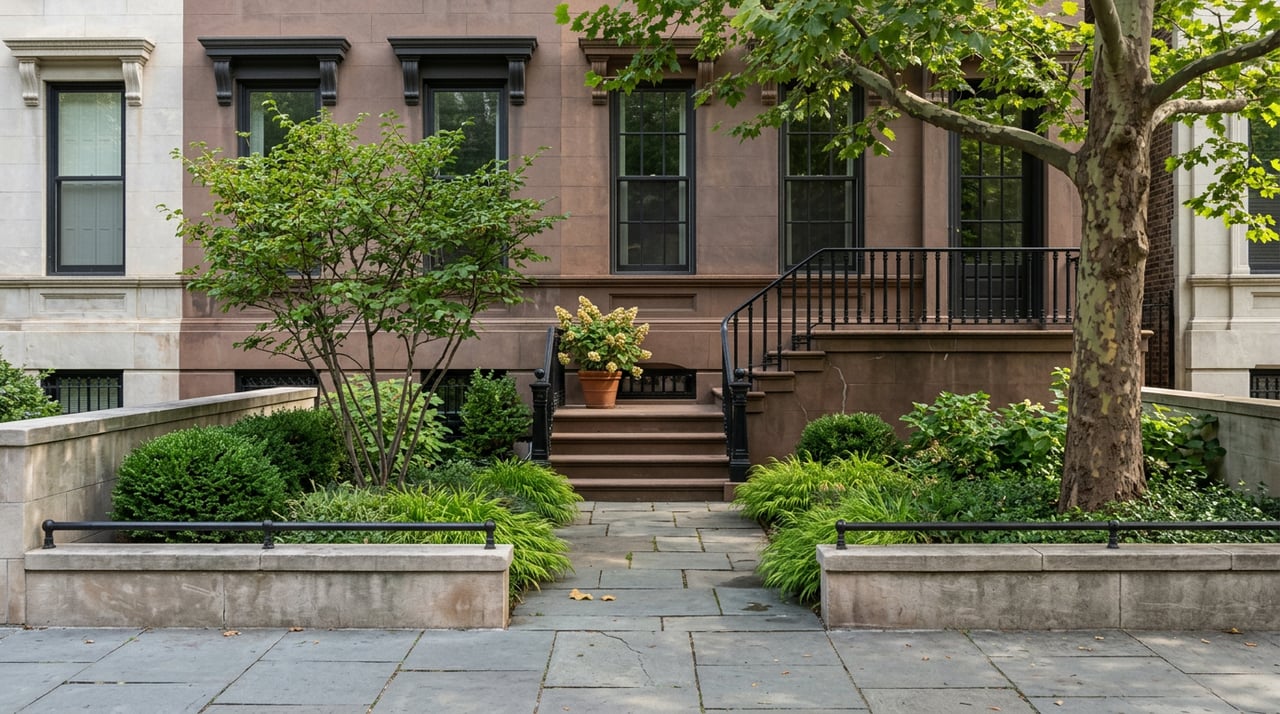
Fort Greene has been a designated historic district since September 26, 1978, covering blocks of Italianate, Queen Anne, and Neo-Grec brownstones raised between 1855 and 1875 around a park that Frederick Law Olmsted and Calvert Vaux redesigned in 1867. Every one of those houses answers to one of three permit paths before the Department of Buildings can move:
Most owners assume every landmarked project lands in that third category. Most don't. The trick is knowing which bucket your scope actually falls into before you've paid for drawings built around the wrong assumption.
If you want to see how much the visibility of a project changes the review, look at what happened this past March at 144 St. Felix Street, one border over from the Fort Greene Historic District line in the adjoining Brooklyn Academy of Music Historic District. A developer proposed building a residential tower on top of the landmarked Hanson Place Central United Methodist Church, restoring the church's Hanson Place and St. Felix Street facades while adding a tower above.
The first version, presented at 27 stories, ran into immediate resistance. Brooklyn Community Board 2 disapproved it outright, and the board for neighboring One Hanson Place submitted its own mockups arguing that nine stories was the tallest the site could reasonably support, noting that 80 of the 92 buildings in the district are three stories or fewer. The developer, working with architects FXCollaborative and ADP Architects, came back with a revised height of 24 stories, a reduction of roughly 30 feet after the Commission recommended cutting the proposal from 328 to 298 feet, and secured approval.
The takeaway isn't that big projects always get scaled back. It's that the LPC's leverage scales with how much of a block a project actually changes. A corner church tower gets months of community board input and a Commission vote. A brownstone owner repointing a stoop or restoring a rear facade in kind is working in an entirely different lane, one that mostly clears at the staff level without a hearing at all.
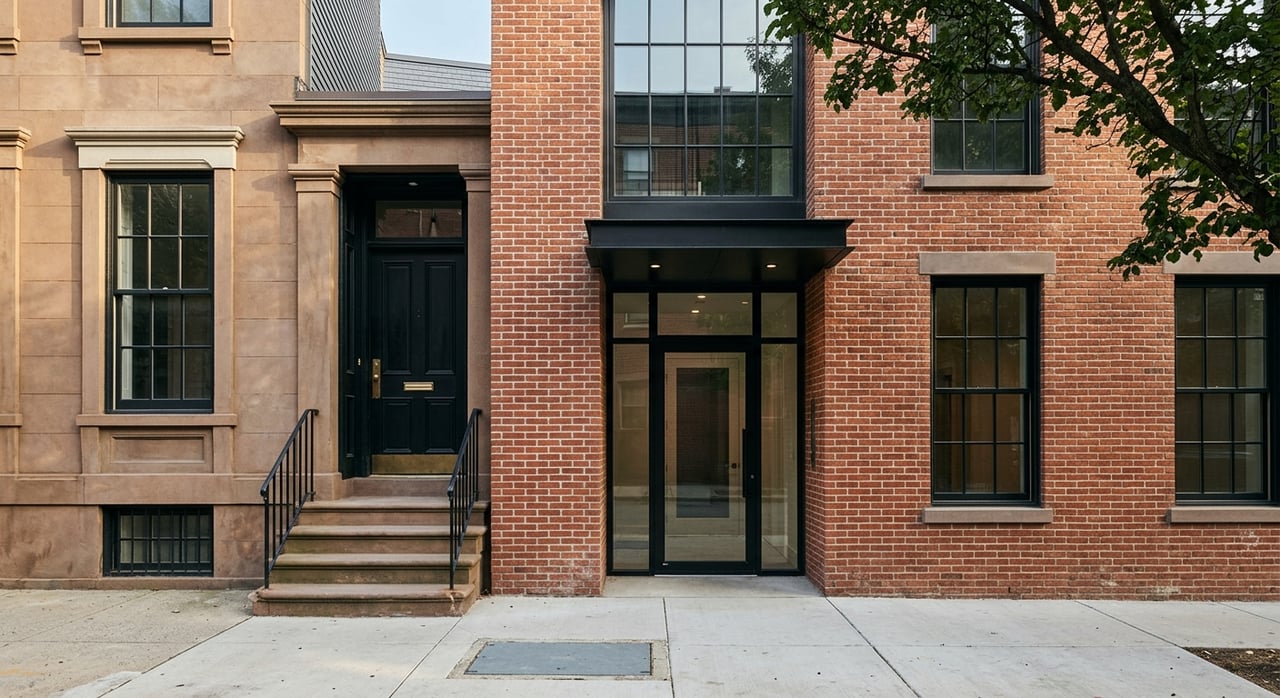
For a sense of what a fully approved, non-controversial renovation looks like inside the Fort Greene Historic District itself, consider 6 South Oxford Street, an Italianate rowhouse built around 1864, just around the corner from the park and one of a row of four built by builder John Doherty. Its Shakespeare-designed renovation restored the facade, replaced windows, reconstructed part of the rear facade on the top two floors, and completed excavation work, all carried through LPC approval alongside the DOB process.
Nothing about that project made news. That's precisely the point. The overwhelming majority of Fort Greene renovations look like 6 South Oxford Street, not 144 St. Felix Street. The paperwork is real, but the risk of an outright fight over your design is much lower than the neighborhood's landmark reputation suggests.
Where sellers actually lose time is in underestimating how the schedule stacks, not in fighting the Commission. As of 2026, renovation guidance for Brooklyn's historic districts puts the numbers something like this:
None of these numbers are prohibitive on their own. Stacked without planning, they're how a seller who wanted to list in spring finds themselves still waiting on a Post-Approval Action in late summer.
The moment landmarks status becomes a sale problem, rather than a renovation problem, is when a project stalls mid-approval or gets finished without ever pulling the right permit. Unresolved LPC violations, open Department of Buildings permits, and active Stop Work Orders don't disappear when you decide to list. Lenders generally won't fund a mortgage on a property with an open permit tied to completed work, and an active Stop Work Order can block a closing outright until it's lifted.
The fix is not complicated, but it has to happen before the listing goes live, not after an attorney's due diligence turns it up. Before you renovate or list a landmarked Fort Greene property, it's worth pulling your own building's record through the city's public Buildings Information System and checking landmarks-specific violations through the LPC's own violations page. Both are free, both are public, and both tell you exactly what a buyer's attorney is about to find anyway.
Does interior work need Landmarks approval if nothing changes outside? Sometimes. If the interior work requires a Department of Buildings permit, affects the exterior in any way, or the building has a designated interior landmark, LPC still needs to sign off, usually through a Certificate of No Effect rather than a full hearing.
How do I find out if my specific house is inside the Fort Greene Historic District? The Historic Districts Council's page on Fort Greene is a useful starting point, and the LPC's own Discover NYC Landmarks map will confirm your address directly, since district boundaries can run through the middle of a block.
Will an open permit definitely stop my sale? Not necessarily, but it will almost certainly come up during a buyer's attorney review, and resolving it proactively before listing is faster and cheaper than negotiating it after an offer is already on the table.
If you're weighing a renovation before you list a Fort Greene brownstone, or you just want a straight read on what your specific block and house will actually require, Hilah Hadaway Williams has walked this exact sequence with Brooklyn owners before. You can also start with a no-pressure look at where your home stands today through a home valuation, or browse more on Fort Greene directly. Let's Connect when you're ready to map the timeline against your own calendar, not just the neighborhood's reputation.
Stay up to date on the latest real estate trends.


With a proven track record and a personalized approach, Hilah delivers a seamless, strategic experience designed around your goals.