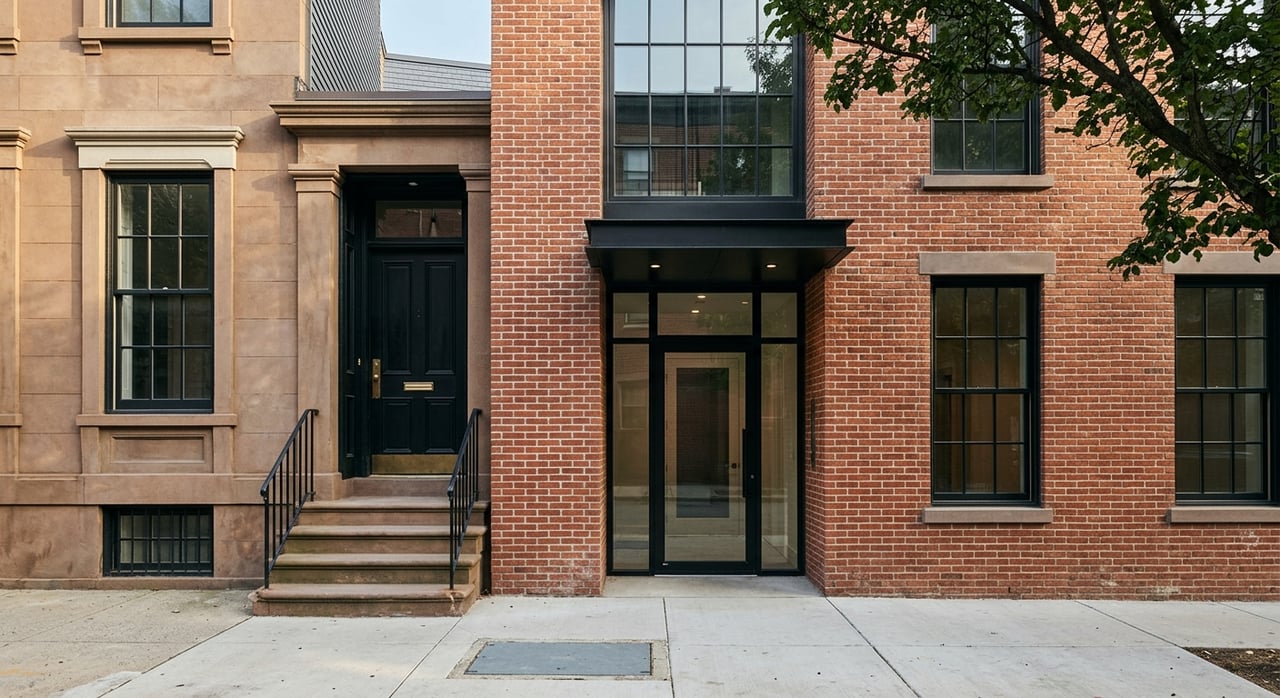
Home Styles In Cobble Hill: Brownstones, Condos, And More
July 9, 2026
July 9, 2026
If you picture Cobble Hill as nothing but rows of classic brownstones, you are only seeing part of the story. This Brooklyn neighborhood is known for its historic streetscape, but its housing options are more varied than many buyers first expect. If you are trying to understand what kinds of homes exist here, how they differ, and what that means for your search, this guide will help you sort it out. Let’s dive in.
Cobble Hill is a low-rise Brooklyn neighborhood shaped by both architecture and preservation. Much of its core residential area sits within the Cobble Hill Historic District, which was designated in 1969 and later extended in 1988.
That historic district status helps preserve the neighborhood’s scale and visual character. It also means many exterior changes to buildings in the district require review and permits from the New York City Landmarks Preservation Commission, which can be an important factor if you are considering updates or renovations.
Cobble Hill’s housing stock works best when you think about it in three broad categories. You will find historic rowhouses and brownstones, adaptive-reuse conversions, and a smaller supply of newer boutique condos.
Each type offers a different ownership experience, layout, and price point. That range is part of what makes Cobble Hill appealing to both first-time buyers and move-up buyers.
Cobble Hill’s signature home is the rowhouse. The neighborhood includes Greek Revival rows from the 1830s and 1840s, followed by Gothic Revival, Italianate, early Romanesque Revival, French Neo-Grec, Queen Anne, and other later styles.
In practical terms, that means the streetscape has more variation than many people expect. You may still get the classic stoop, brick or brownstone facade, and tall windows, but not every block feels identical.
Some of the neighborhood’s rowhouses are large townhouses suited to buyers who want more bedrooms, flexible living space, or private outdoor space. Others feel a bit more compact and understated compared with the grander townhouse stock you might see in some nearby Brooklyn neighborhoods.
Cobble Hill also includes Workingmen’s Cottages dating to the 1870s. These homes add another layer to the neighborhood’s visual identity and help explain why Cobble Hill does not feel overly uniform.
For buyers, these smaller historic homes can offer character in a more modest footprint. They may appeal to people who love period details and neighborhood charm but do not necessarily need a large townhouse.
Not every character-filled home in Cobble Hill started life as a townhouse. The neighborhood also includes converted schoolhouses, former carriage houses, and Gothic Revival churches that have been turned into condos or loft-like residences.
These adaptive-reuse homes often attract buyers who want original architectural details with a more manageable ownership setup than a full townhouse. They can offer a strong mix of prewar character, unique layouts, and lower-maintenance living.
Yes, newer development exists in Cobble Hill, even in a neighborhood so strongly associated with historic homes. The supply is limited, though, and tends to be boutique in scale rather than large or high-rise.
One current example is 110 Boerum Place, a 21-residence development described as drawing inspiration from the neighborhood’s brownstone character. That tells you a lot about Cobble Hill’s new development story: newer buildings are here, but they often try to fit the neighborhood’s established scale and design language.
The right home in Cobble Hill often comes down to how you want to live day to day. A townhouse, a condo conversion, and a boutique new condo may all sit within the same neighborhood, but they usually offer very different experiences.
A true townhouse often gives you the most space and the most control. You may have multiple floors, private outdoor space, and room for work, guests, or long-term lifestyle changes.
That said, townhouse ownership also comes with more direct responsibility for maintenance and upkeep. If the home sits within the historic district, exterior work may also involve Landmarks review.
A condo conversion can be a good middle ground if you want historic charm without taking on an entire building. Depending on the property, you may get original details, interesting layouts, and a smaller footprint that feels easier to manage.
This type of home can be especially appealing to first-time buyers who are design-minded and want character-rich ownership in a premium neighborhood. It can also work well for buyers who prefer lower-maintenance living than a townhouse usually requires.
Newer boutique condos tend to appeal to buyers who prioritize modern finishes, updated systems, and more predictable layouts. In Cobble Hill, these homes still tend to be relatively limited in supply.
Because they are not the dominant housing type in the neighborhood, they can stand out for buyers who want a newer home while staying in a brownstone setting. That mix of convenience and location can be a major draw.
Cobble Hill is one of Brooklyn’s more expensive neighborhoods, but it is not a one-size-fits-all market. Different data sources capture the market in slightly different ways, but they all point to a premium, low-inventory environment.
Realtor.com’s May 2026 market snapshot shows a median listing price of $1,895,000, 50 active for-sale listings, and a median 24 days on market. StreetEasy shows a $2.5 million median sale and describes Cobble Hill as a low-turnover market with low inventory.
The active listing mix shows just how wide the range can be. Examples include a 495-square-foot one-bedroom listed at $515,000, a two-bedroom listed at $2,000,000, a three-bedroom condo at $3,250,000, a townhouse at $6,500,000, and a penthouse at $12,000,000.
The big takeaway is simple: your budget may shape not just how much space you get, but which home style is realistic. In Cobble Hill, a compact condo conversion and a full townhouse can sit worlds apart in both price and ownership experience.
Cobble Hill rewards buyers who look beyond finishes and staging. Before you fall in love with a property, it helps to get clear on a few practical points.
This is one of the most important questions in Cobble Hill. If a home is within the Cobble Hill Historic District, exterior changes typically require review and permits from the Landmarks Preservation Commission.
That does not make buying in the district a negative. It simply means you should understand the review process if you are thinking about facade work, windows, or other exterior updates.
Two homes can look similar from the street and function very differently once you step inside. A true townhouse and a condo conversion may have very different layouts, maintenance obligations, and long-term costs.
Understanding that distinction early can help you focus your search. It also helps set realistic expectations around privacy, flexibility, and upkeep.
Many buyers assume there is no new construction in Cobble Hill. In reality, there is some newer condo product, but it is limited and usually boutique in scale.
If you want modern systems and finishes in this neighborhood, it is possible to find them. You just may need patience, since supply is not large.
If you are a first-time buyer drawn to Cobble Hill, smaller condos and conversion properties may offer the most accessible entry points. They can give you neighborhood character and ownership in a more compact format.
If you are moving up and need more space, larger condos and townhouses often become the focus. For many buyers, the real value is in the combination of extra bedrooms, flexible layout, and private outdoor space.
If you are shopping at the top of the market, rare townhouses and penthouses tend to stand out. In those cases, architectural provenance, preservation context, and renovation quality can matter just as much as square footage.
Cobble Hill is not a neighborhood where every listing can be judged by the same checklist. Historic district rules, building type, ownership structure, and limited inventory all play a bigger role here than they do in many other markets.
That is why it helps to work with someone who understands how these home styles differ in real life, not just on paper. The right guidance can help you compare options more clearly, move with confidence, and focus on the version of Cobble Hill living that truly fits your goals.
Whether you are drawn to a classic brownstone block, a one-of-a-kind conversion, or a boutique condo, Cobble Hill offers a layered housing market with real character. If you want help sorting through the options, reach out to Hilah Hadaway Williams for thoughtful, neighborhood-savvy guidance.
Stay up to date on the latest real estate trends.


With a proven track record and a personalized approach, Hilah delivers a seamless, strategic experience designed around your goals.